Maybe it's the Danube or the spa culture that comes from having the highest concentration of hot springs in Europe, or the universal summer destination of Hungary's own Lake Balaton -- the largest lake in Central Europe-- or it could be the longing of a landlocked people for the distant sea. Maybe it's the abundance of state-of-the-art swimming facilities and a history of celebrity coaches, champions and world records. Maybe it's the humidity. Whatever the reason, Hungarians have long had an affinity for water.
Case in point: this mind-bending video from Ferenc Bákro-Nagy and Dániel Fiantok, with music from The Tear Garden, courtesy of index.hu (following a word from a sponsor. Tip 1: click on "hirdetés átugrása>" to skip the ad. Tip 2: Double-click on the video to go full screen):
The text in the video (the title of which is Enjoy the beauty of underwater ballerinas) is translated below:
What is synchronized swimming? The artistic and elegant mix of dance and swimming during which competitors present various technical elements and formations. The first organized competition was in Berlin in 1891. From then, the sport of water ballet gained fame. It has been an Olympic sport since 1984. Practitioners compete solo, in pairs and in teams. The technical and freestyle routines last from 2.5 to 5 minutes. The judges score on a 0.0 to 10.0 decimal scale. Attention is paid to the difficulty, choreography, synchronization and technical excellence of the routine. The sport is dominated by Russia, followed by Japan and Spain. Hungary ranks 16th in solo, and 21st in pairs in the world. The Hungarian National team is competing in the World Championships in Budapest in every category. The girls in the video are in the colors of the team at the downtown Home Defense Sports Association. They are preparing for the Fina World Masters Championship in August.
I’m starting to think that the main problem with being on the left is that there’s no reward in being right. At least being on the right feels good even if the Dumasses are always wrong. Maybe especially when they’re wrong, and no wonder they seem determined to cultivate error at every turn. How can the left compete with that?
When I see the names of certain Cassandras on the left I get into an instant lemon pucker because I know whatever they are writing about is going to deeply suck on some level. I feel my life already sucks without knowing the truth about everything.
More power to them and others of their ilk. These pitbulls are at least on the job, but speaking for myself, I rarely get the sense that there’s any hope underneath the fearless quest for truth. What if the truth is: There is no hope? We’re all screwed! Is there a point at which you can say, "All right! Stop reminding me!"
I don’t have a constitution for vigilance. But I don’t have a good alternative to vigilance either. As long as the root of so much of the miserable state we find ourselves in is self-inflicted and until the conversation becomes honest and inclusive and infused with the proper modicum of civility and intelligence and respect for our differences and desire to find and reach our common goals -- and we, all of us, need it to be sooner rather than later-- let the Cassandras have at it and try not to get in their way.
The Song is Eet by Regina Spektor, from the 2009 album, far (video directed by Adria Petty who also directed the video for Us that greatly contributed to putting Regina on the map):
The term "eet" refers to the backspace key on a typewriter, the key that backs the carriage up a space to let you type over a mistake, hence the prominence of that motif in the video. Aside from the poetic resonance of the do-over imagery in itself, I seem to recall her saying in interviews when the album came out that the obscurity of the word "eet" had some importance to the inspiration for the song. She wanted it to convey something of how it felt for a girl of 9 speaking only Russian, with no English other than the bootlegged Beatles tapes her father had played for her from her earliest childhood in Soviet-era Moscow, to find herself suddenly living in a world-- specifically The Bronx, New York-- where everyone but her spoke that same gibberish, and the sense of how it felt when the babbling in those songs she'd known her whole life started to signal meaning.
Here are the lyrics from the official booklet that accompanied the album. Read them as you listen:
She follows them to the letter. The line I would most like to draw your attention to is the charmingly orthographically challenged: "you're ears in your headphones to drown out your mind". You are not ears in your headphones, Regina. Or are you? Maybe she's even deeper than I thought? Would not surprise me. But as a non-native English speaker who had different aspirations for her second language she has copped to not being spelling bee material in interviews so let's go with the interpretation that the line she intends us to hear is: your ears in your headphones. Maybe it's because I devoured the booklet as I was learning the album that to this day that is the line I always hear her sing.
Which brings me to my point, because if you already sing the lyrics to yourself whenever you hear the song, the probability is almost 100% that I've just blown your mind. For I have yet to find an unofficial lyrics site or a YouTube cover of any quality (andtherearemanyofquality) in which that line is not rendered: "you're using your headphones".
Or maybe you've missed it again. In the version Regina sings, the ears are clamped inside the innards of electronics equipment that serves to swamp the head the ears belong to in an embrace of escape from the barrage of words from the internal voice that will not shut up. In the version every one else sings, the ears are missing altogether from the equation. It's a subtle difference-- one that has almost no bearing on the literal meaning of the phrase-- but it's a difference. "You're using your headphones to drown out your mind" is prose; "Your ears in your headphones to drown out your mind" is poetry. This means that everyone who hears or performs the song Eet ever, is doing it wrong (wrong I say!), with the exception of 2 people (and, face it, I may be the only one of the two who actually cares).
End of story, right? Wrong again! For on Regina Spektor's latest album, Remember Us to Life,history is repeating itself. The song in this case is Grand Hotel, possibly among the greatest in her epic catalog:
The second verse is where the trouble lies:
Under the floorboards, there's a deep well
That leads to a spring that sprung up in hell
That's where old devils danced and kissed
And made their blood pacts in the ancient mists
I did not buy the CD version of the album, just the download, but from what I can tell there is not an accompanying booklet for the CD or at least images of it are not readily available online. In any case, I'm basing my certainty about this on my ears, on, again, the poetic sense of it, and -- I mean, come on!-- on my track record. Nevertheless once again, the version of the last line that is proliferating on lyrics sites and YouTube videos is this:
And made their blood pacts in the ancient myths
While I could be wrong this time and everyone else right, I would be sad if that were so because the version I hear befits the song. Once again: Ancient myths: prose, and tin-eared prose at that; Ancient mists: Poetry.
**********
Speaking of pacts ... take some heart that much of the prevailing opinion from many of those still in the Paris Climate Agreement is that Trump out of the agreement might be somewhat better for the climate than Trump micromanaging in his typical cloddy inept fashion from within. Vent, communicate, plan, push. The agreement stands with or without. The climate and the struggle to mitigate our effect on it will catch us on the flip.
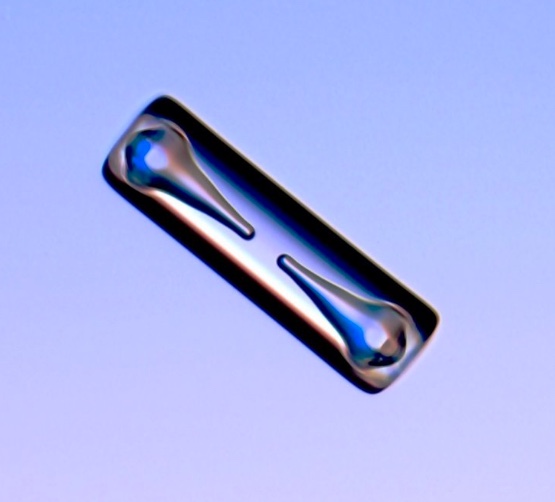
To those who might be tempted to return the insult by pointing out that people who mock 'intersectional' activists with the epithet "Snowflake" are themselves too delicate and special in their pet proclivities, aspects and causes to tolerate heat: It's true (think the Snowflake-in-Chief if you doubt it), but don't do it. It was a clever and original put-down exactly once-- the first time someone used it. Every time since has been essentially plagiarism, perpetrated by unoriginal loutish slobs. Do you want to be one of those? Common thievery aside, what exactly is the insult? That people are too individual? The thing that America is supposed to be all about? It's a free country, so feel free to perpetrate the thoughtless mimicry of the impressionable snots who jump on every nasty snark wagon that drifts by. But before you drag the noble ice crystal down to their level, consider the elegance of the physical algorithms that went into the emergence and brief existence of these unique and precious specimens.
TheEurasianHoopoe is found widely across Africa, Europe and Asia. A member of the order Coraciiformes, it is closely related to hornbills, kingfishers and bee-eaters. It lives year round in Central Africa; large numbers of the species nest annually across Europe and Asia. They favor a varied habitat with access to scrub for foraging insects, but owing to a characteristic migratory zeal, they are no strangers to more extreme settings. A hoopoe was spotted traversing the Himalayas on the first British Everest expedition in 1922 at an elevation greater than 6000 feet. In 1975, one was seen in the Yukon Delta in Alaska.
In Ancient Egypt, the hoopoe was considered sacred; illustrations of it are found in tombs and on papyrus. Revered for monogamy and intergenerational loyalty, it was a popular pet for children. Farther east, it was considered one of Solomon’s birds in the bible, honored with a crown for shielding the king from the sun, or as some sources suggest, for acting as a messenger between Solomon and the Queen of Sheba. When other birds became jealous and hunters became greedy for it, the gold crown was replaced with one of feathers.
Hungarian Ornithological and Nature Conservation Society's 2015 Bird of the Year. http://felegyhazikozlony.eu/sa_hirek/i_napi_pozitiv_26/i_a_bubos_banka_lett_iden_az_ev_madara_3175
The hoopoe makes a nest in the hollows of trees, cliffs or even buildings, and during incubation seals the entrance hole with mud. The word adobe is said to come from one Egyptian name for the hoopoe: Db. As further protection against predation or parasites, the female hoopoe and her nestlings secrete from uropygeal glands a foul smelling liquid which lines the nest and is spread on feathers. It’s thought in some circles that the expression «it’s an ill bird that fouls its own nest» was inspired by this behavior. The nesting female is also able to aim its feces at intruders with accuracy.
The blood, eyes, heart and feathers of the hoopoe were said to ward off evil. Also considered magical was the lapis quirinus, a stone said to be found in the hoopoe’s nest. Artifacts of the bird are still sold for incantatory purposes on the black market in Morocco.
Voted the National Bird of Israel in 2008, beating out the White Crested bulbul