The Song is Eet by Regina Spektor, from the 2009 album, far (video directed by Adria Petty who also directed the video for Us that greatly contributed to putting Regina on the map):
The term "eet" refers to the backspace key on a typewriter, the key that backs the carriage up a space to let you type over a mistake, hence the prominence of that motif in the video. Aside from the poetic resonance of the do-over imagery in itself, I seem to recall her saying in interviews when the album came out that the obscurity of the word "eet" had some importance to the inspiration for the song. She wanted it to convey something of how it felt for a girl of 9 speaking only Russian, with no English other than the bootlegged Beatles tapes her father had played for her from her earliest childhood in Soviet-era Moscow, to find herself suddenly living in a world-- specifically The Bronx, New York-- where everyone but her spoke that same gibberish, and the sense of how it felt when the babbling in those songs she'd known her whole life started to signal meaning.
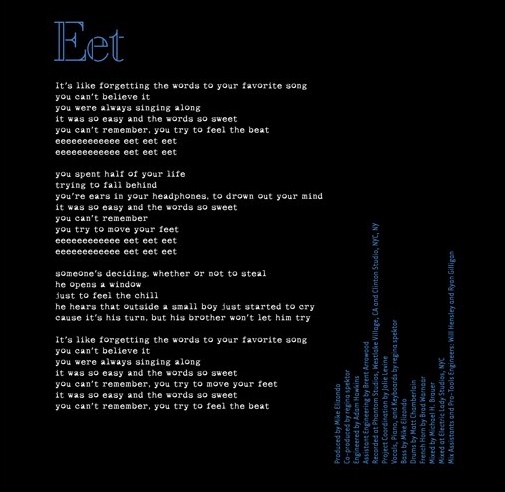
Here are the lyrics from the official booklet that accompanied the album. Read them as you listen:
She follows them to the letter. The line I would most like to draw your attention to is the charmingly orthographically challenged: "you're ears in your headphones to drown out your mind". You are not ears in your headphones, Regina. Or are you? Maybe she's even deeper than I thought? Would not surprise me. But as a non-native English speaker who had different aspirations for her second language she has copped to not being spelling bee material in interviews so let's go with the interpretation that the line she intends us to hear is: your ears in your headphones. Maybe it's because I devoured the booklet as I was learning the album that to this day that is the line I always hear her sing.
Which brings me to my point, because if you already sing the lyrics to yourself whenever you hear the song, the probability is almost 100% that I've just blown your mind. For I have yet to find an unofficial lyrics site or a YouTube cover of any quality (andtherearemanyofquality) in which that line is not rendered: "you're using your headphones".
Or maybe you've missed it again. In the version Regina sings, the ears are clamped inside the innards of electronics equipment that serves to swamp the head the ears belong to in an embrace of escape from the barrage of words from the internal voice that will not shut up. In the version every one else sings, the ears are missing altogether from the equation. It's a subtle difference-- one that has almost no bearing on the literal meaning of the phrase-- but it's a difference. "You're using your headphones to drown out your mind" is prose; "Your ears in your headphones to drown out your mind" is poetry. This means that everyone who hears or performs the song Eet ever, is doing it wrong (wrong I say!), with the exception of 2 people (and, face it, I may be the only one of the two who actually cares).
End of story, right? Wrong again! For on Regina Spektor's latest album, Remember Us to Life,history is repeating itself. The song in this case is Grand Hotel, possibly among the greatest in her epic catalog:
The second verse is where the trouble lies:
Under the floorboards, there's a deep well
That leads to a spring that sprung up in hell
That's where old devils danced and kissed
And made their blood pacts in the ancient mists
I did not buy the CD version of the album, just the download, but from what I can tell there is not an accompanying booklet for the CD or at least images of it are not readily available online. In any case, I'm basing my certainty about this on my ears, on, again, the poetic sense of it, and -- I mean, come on!-- on my track record. Nevertheless once again, the version of the last line that is proliferating on lyrics sites and YouTube videos is this:
And made their blood pacts in the ancient myths
While I could be wrong this time and everyone else right, I would be sad if that were so because the version I hear befits the song. Once again: Ancient myths: prose, and tin-eared prose at that; Ancient mists: Poetry.
**********
Speaking of pacts ... take some heart that much of the prevailing opinion from many of those still in the Paris Climate Agreement is that Trump out of the agreement might be somewhat better for the climate than Trump micromanaging in his typical cloddy inept fashion from within. Vent, communicate, plan, push. The agreement stands with or without. The climate and the struggle to mitigate our effect on it will catch us on the flip.
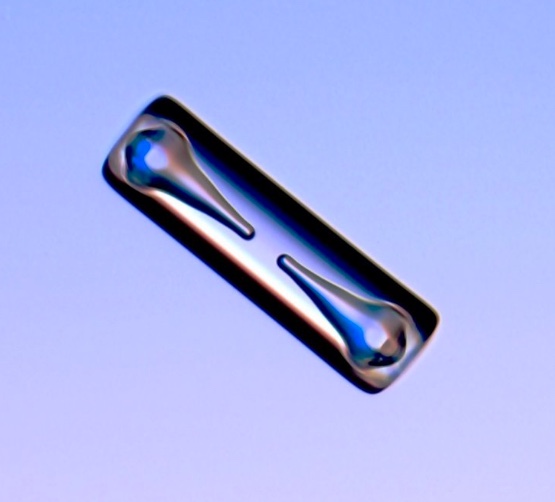
To those who might be tempted to return the insult by pointing out that people who mock 'intersectional' activists with the epithet "Snowflake" are themselves too delicate and special in their pet proclivities, aspects and causes to tolerate heat: It's true (think the Snowflake-in-Chief if you doubt it), but don't do it. It was a clever and original put-down exactly once-- the first time someone used it. Every time since has been essentially plagiarism, perpetrated by unoriginal loutish slobs. Do you want to be one of those? Common thievery aside, what exactly is the insult? That people are too individual? The thing that America is supposed to be all about? It's a free country, so feel free to perpetrate the thoughtless mimicry of the impressionable snots who jump on every nasty snark wagon that drifts by. But before you drag the noble ice crystal down to their level, consider the elegance of the physical algorithms that went into the emergence and brief existence of these unique and precious specimens.
TheEurasianHoopoe is found widely across Africa, Europe and Asia. A member of the order Coraciiformes, it is closely related to hornbills, kingfishers and bee-eaters. It lives year round in Central Africa; large numbers of the species nest annually across Europe and Asia. They favor a varied habitat with access to scrub for foraging insects, but owing to a characteristic migratory zeal, they are no strangers to more extreme settings. A hoopoe was spotted traversing the Himalayas on the first British Everest expedition in 1922 at an elevation greater than 6000 feet. In 1975, one was seen in the Yukon Delta in Alaska.
In Ancient Egypt, the hoopoe was considered sacred; illustrations of it are found in tombs and on papyrus. Revered for monogamy and intergenerational loyalty, it was a popular pet for children. Farther east, it was considered one of Solomon’s birds in the bible, honored with a crown for shielding the king from the sun, or as some sources suggest, for acting as a messenger between Solomon and the Queen of Sheba. When other birds became jealous and hunters became greedy for it, the gold crown was replaced with one of feathers.
Hungarian Ornithological and Nature Conservation Society's 2015 Bird of the Year. http://felegyhazikozlony.eu/sa_hirek/i_napi_pozitiv_26/i_a_bubos_banka_lett_iden_az_ev_madara_3175
The hoopoe makes a nest in the hollows of trees, cliffs or even buildings, and during incubation seals the entrance hole with mud. The word adobe is said to come from one Egyptian name for the hoopoe: Db. As further protection against predation or parasites, the female hoopoe and her nestlings secrete from uropygeal glands a foul smelling liquid which lines the nest and is spread on feathers. It’s thought in some circles that the expression «it’s an ill bird that fouls its own nest» was inspired by this behavior. The nesting female is also able to aim its feces at intruders with accuracy.
The blood, eyes, heart and feathers of the hoopoe were said to ward off evil. Also considered magical was the lapis quirinus, a stone said to be found in the hoopoe’s nest. Artifacts of the bird are still sold for incantatory purposes on the black market in Morocco.
Voted the National Bird of Israel in 2008, beating out the White Crested bulbul
After a lifetime of dependence on a pre-set alarm as the means of heralding morning, he suddenly enters a new phase in which he finds himself awake, listening to the chorus of birdsong that greets a dawn prying itself inexorably from night, long before the chimes of his alarm are due to sound. He rises and makes his way item by item through the routine — the dog walk, the coffee brew, the transport of household waste to the curb on the municipal schedule — and finds himself farther and farther down the list before it registers that the racket suddenly vying for attention over the aerated whoosh of tap water is the alarm.
The morning proceeds. A leisurely morning, in which nothing other than morning is attended to. At length, there’s no more putting it off. He must start for the day. It’s getting to be less and less frequently that he chooses public transportation to the station, opting instead to plug in the music and make a slow, meditative course on foot— an almost straight path to the station through back streets and parking lots that is partly designed to compensate for his reluctance to shake leisure, but that in its stillness prolongs the detachment from the day.
I'm a fan
Crossing over the highway and a plot of railroad tracks that accompany each other for this stretch to and from the city in parallel tracts for passenger trains, freight trains and the metro train he’s bound for, he finds himself at the park-like setting of the civically tasteful station. On the platform, he finds himself almost hoping for some kind of trouble on the line that would accommodate the lack of hurry he himself is in, in spite of his ostensible mission to hasten to work. It's not a long shot, but after a year of overdue maintenance on the system, it's become a rarer thing and most mornings he's soon aboard and on his way.
The train’s route is above ground for the first three stations and he can’t resist soaking in the view from his window seat, a view that affords him a privileged glimpse at life from the alley. Pristine back yards, utilitarian sheds and a changing array of detritus that interlopers have brought in in the middle of the night taking advantage of this oasis of seclusion so close to the city limits, and that remain only as long as they're not found, including once or twice a year, a new, wheel-less, stripped car on blocks tucked away from the homes behind fences and shrubbery. The train traverses the invisible border into the city, and makes its first stop. Soon, after crossing the river and passing by the power plant and a public driving range and golf course, it descends into the tunnel.
Another work of K.O.R. aka Creak, I think. It reads: Welcome to Plead Guilty County Murderland.
Having transferred several stops in within the system’s bowels to change to a northerly direction, he purposely rides one stop beyond the logical one, preferring a station beyond the edge of center, a yet-to-be up-and-coming district that is still mostly down-and-out. Emerging again into the light of day and whatever weather the day has in stock, he makes his way down the city streets, past vacant vintage storefronts and a modest brick apartment building of utilitarian design from an era when housing and urban development were a priority-- a nearly empty landscape now except for a smoker parked on a stoop here, there a woman making her slow way down the sidewalk with the aid of a walker. The cranes visible from this vantage above the skyline from sprawling, stalling construction just beyond the neighborhood are still no immediate threat.
He crosses a major avenue— the dividing line into the gleaming zone in which he soon finds the glass tower of his office. As he makes his way beside the empty outdoor tables of brand new restaurants, and past the windows of the gym behind which patrons furiously pedalling their stationary bikes try not to see him, he’s keenly aware that the best part of the day is already behind him. He exits the street and lets the building swallow him.
"The original is better." "This doesn't even sound like the first one." "Rip-off!"
Shut up-puh!
I'm of the school that thinks a song is meant to be sung. If you think of a song as a product, you're making an entertainment lawyer very happy. If you think of it as expression, you're a human.
The song - With Every Heartbeat by Robyn (with producer and musician Kleerup):
There are 2 chords. The lyrics don't rhyme. There are no verses, no chorus. The melody meanders. And it's hypnotic and gut wrenching from start to finish. Everything about the song makes sense. There's an almost archetypal quality to the way it interacts with the brain, so it's not surprising in the least that it has inspiredcovers, homages, tributes, personalinterpretationsbyotherartists.
But there are covers, and there are covers. I've had all of the above and below on my playlist for a while and when they follow each other as shuffles are wont to make happen, it's always good. It may be the song itself that is responsible for the newness each time I hear it. But credit must also be given to the originality and quality of each interpretation. I think of each of these covers as a fresh way into it. I wonder if a person uninitiated in the song (with either no English or Swedish or a poor facility for remembering lyrics) would even recognize that they share the same bones.
Cover 1 - From Swedish Television a live acoustic version in Swedish (För varje hjärtslag) by the mini-super group of Anna Järvinen (metronome, harmonica, chimes and elvishness) & Annika Norlin (accordion and intense stare):
Cover 2 - The Lonesome Animals' dreamy California-esque ear bath:
Cover 3 - Another live version from Sweden, in Swedish, by Linnea Algeblad (at the piano) and Johanna Blomberg (harmonies) who strip everything to its refined, sublime essence:
Cover 4 - An entrancing countrified version from baskery: